
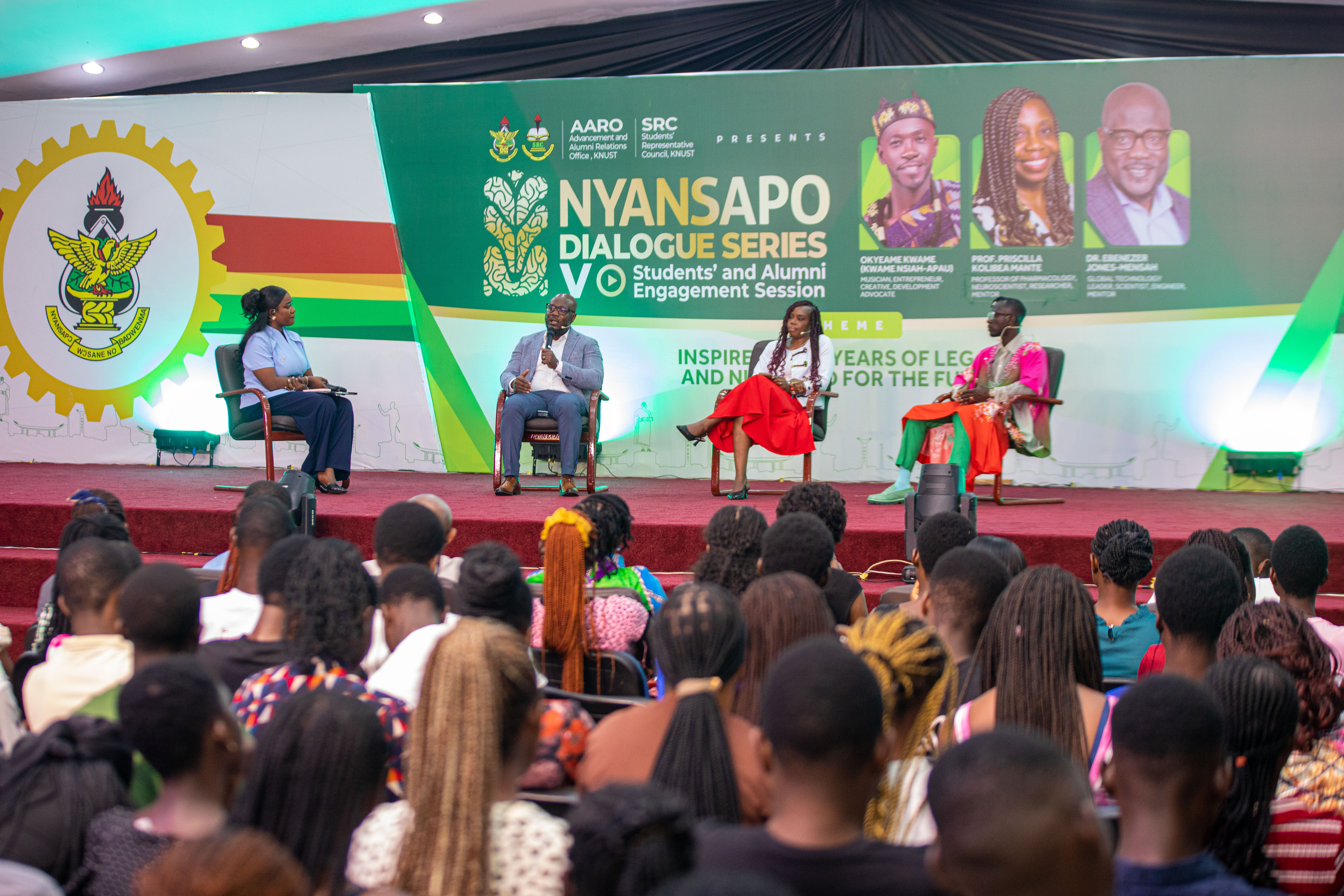
Students at the Kwame Nkrumah University of Science and Technology, Kumasi (KNUST) have been encouraged to develop practical career skills, build meaningful relationships, discover their identity and remain open to academic opportunities they may not have initially considered.
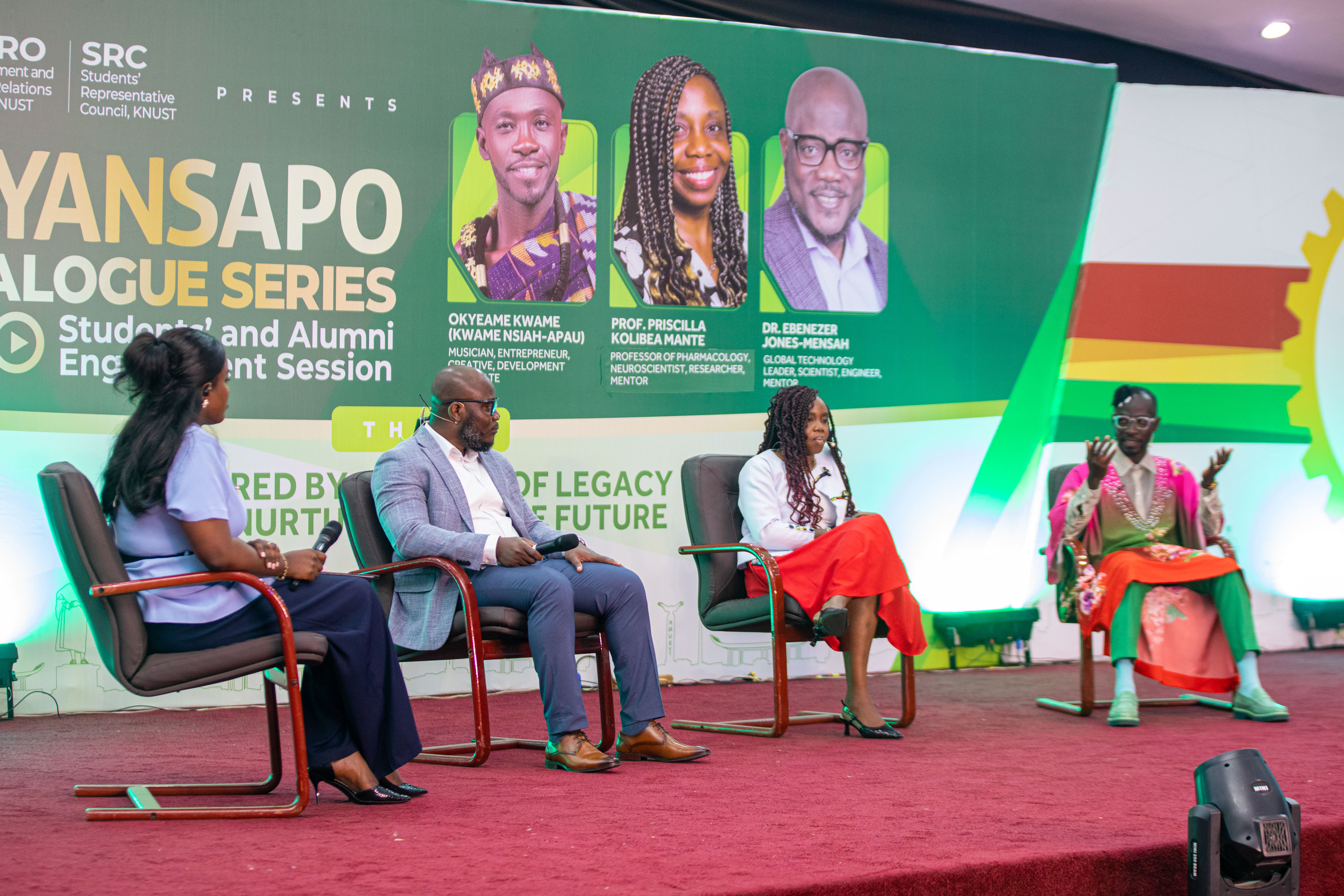
Speaking at the fifth edition of the Nyansapo Dialogue Series, scientist, engineer and global technology leader Dr. Ebenezer Jones-Mensah; Ghanaian musician, entrepreneur and KNUST alumnus Okyeame Kwame; and Prof. Priscilla Kolibea Mante, a Professor of Pharmacology and neuroscientist at KNUST, shared experiences from their academic and professional journeys.
Their accounts explored how additional skills, mentorship, personal values and a willingness to reconsider established plans could shape students’ experiences and prospects beyond graduation.
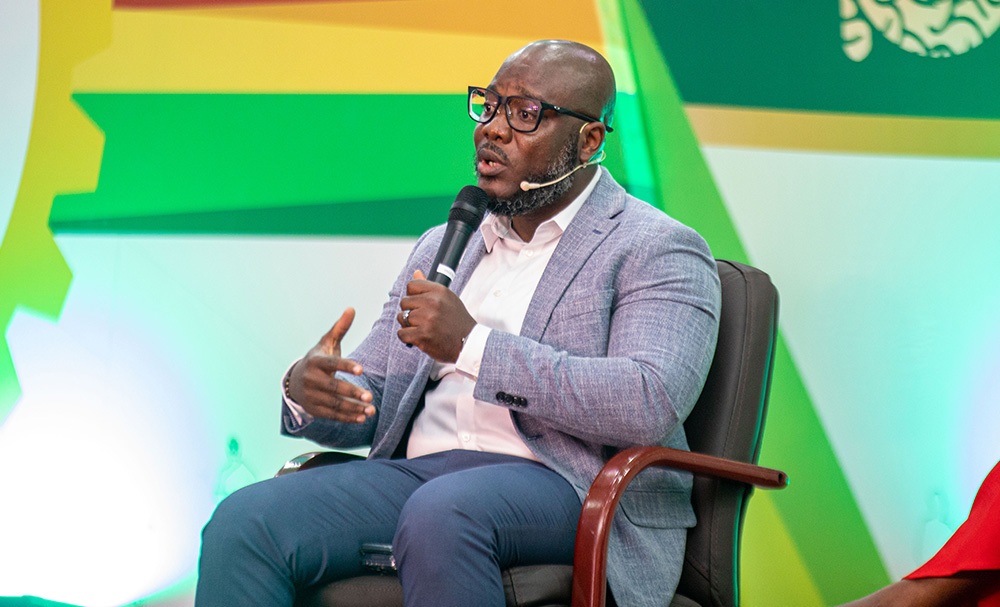
Dr. Jones-Mensah urged students to begin preparing for their careers while at university, saying academic qualifications alone might not sufficiently distinguish graduates competing for the same opportunities.
He encouraged them to identify the competencies relevant to their chosen fields and use their time at KNUST to acquire practical skills alongside their academic qualifications.
“Everybody is going to graduate with a degree in mathematics. Everybody is going to graduate with a degree in electrical engineering. But what distinguishes you from the other candidates looking for the same job is that additional skill that you have,” he said.
Dr. Jones-Mensah advised students to build their career capital throughout their university education. This, he explained, required identifying professional goals early and pursuing relevant learning opportunities alongside their coursework, rather than waiting until graduation to prepare for employment.
He also emphasised the importance of professional relationships and the role of mentorship in helping students recognise and pursue opportunities.
Recounting an experience from his own life, he said a connection with a former student leader led him to mentor a student who later progressed to postgraduate studies.
“Your degree will take you wherever you take it. But there are people who open the doors for you,” he said.
Beyond acquiring skills and building networks, Dr. Jones-Mensah urged students to cultivate integrity and diligence in their professional lives.
He recalled an occasion when his team discovered an error in a work process, explaining that acknowledging mistakes was essential to maintaining trust.
“You have to work diligently with integrity,” he advised.
He further encouraged students to give back through mentorship and guidance, noting that helping younger students and prospective applicants was one way to contribute to society.
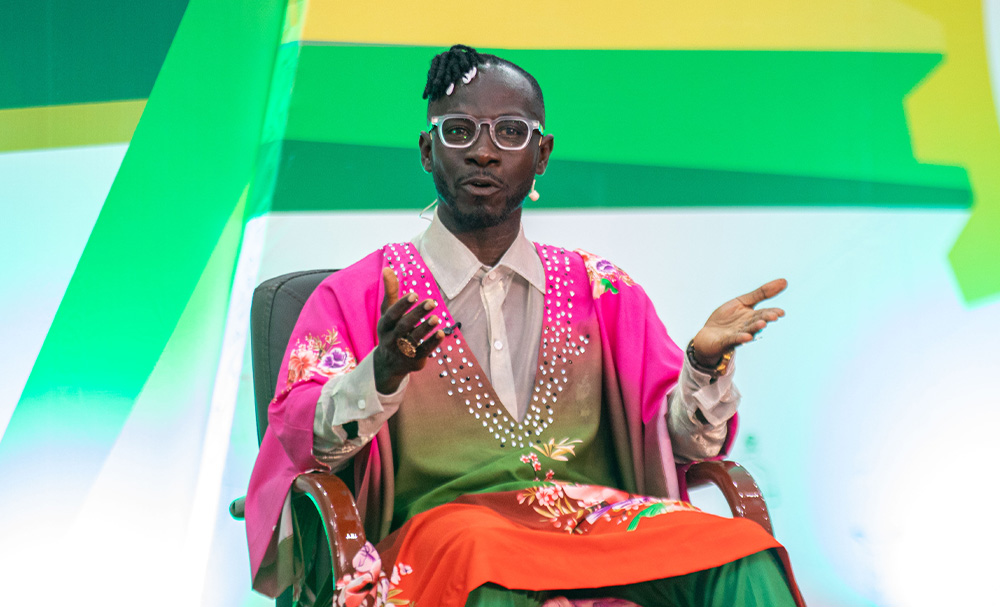
The importance of mentorship and relationships also featured in the remarks of Kwame Nsiah-Apau, popularly known as Okyeame Kwame, who urged students to use their university experience to understand themselves and develop the values needed for life beyond graduation.
Reflecting on his early experiences with education, he recounted struggles with reading and writing that affected his confidence and influenced his perceptions of what he could achieve.
He said guidance from a mentor helped him develop an interest in language and literature, while his subsequent education at KNUST broadened his understanding of language and society.
His studies, he explained, helped shape his identity and music career and enabled him to appreciate how music could influence people beyond entertainment.
Okyeame Kwame encouraged students to build relationships with lecturers and others who could offer guidance, alongside the friendships they formed with their peers.
He recalled how a lecturer who mentored him during his time at KNUST helped him manage his conduct and avoid responding to provocation in the music industry. That guidance, he said, had lasting implications for his public image.
“It is important that we build relationships, not only with your friends, but also with lecturers,” he advised.
He urged students to be deliberate about the company they keep and the values they develop during their university years, saying these choices could influence their conduct and future opportunities.
For Okyeame Kwame, the university experience offered an opportunity to develop a sense of identity, practical skills and ethical values alongside academic qualifications.
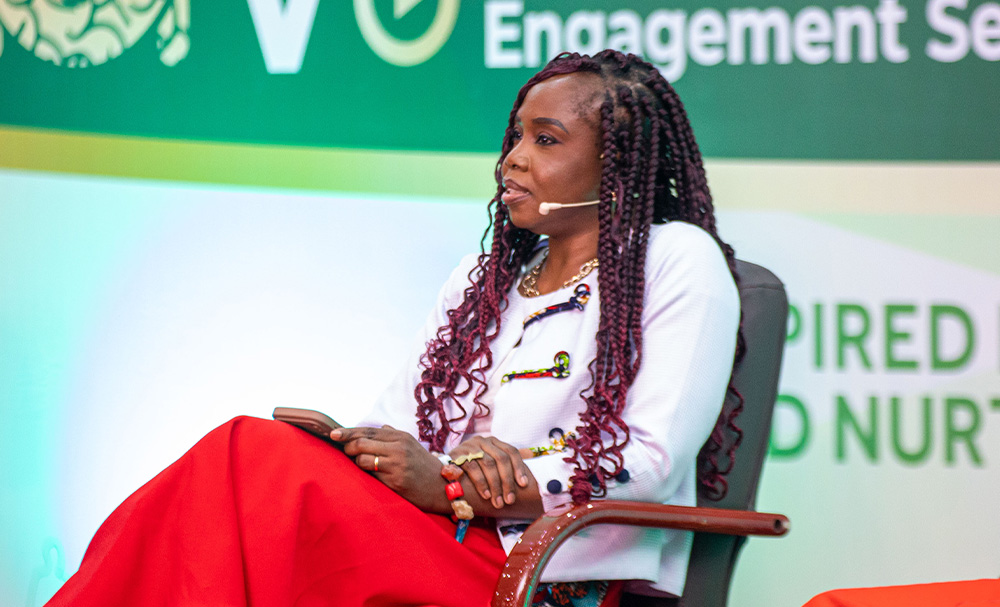
Prof. Mante, meanwhile, encouraged students to remain open to unexpected academic opportunities, drawing on changes in her own plans that eventually led her to a career she had not initially envisioned.
She recalled that she first aspired to become a plastic surgeon before developing an ambition to become president of the World Bank. The latter ambition led her to study General Arts in senior high school.
However, she later realised that the programme did not suit her interests and requested permission to transfer to the science class.
After receiving approval, she worked with classmates to catch up on the lessons she had missed and went on to perform well in science.
Another change followed when she applied to study medicine at KNUST but was admitted to Pharmacy, her second-choice programme, because of limited admissions to medicine that year.
Prof. Mante said she embraced Pharmacy and eventually emerged as a top-performing student in her class.
Drawing on that experience, she encouraged students who had not gained admission to their preferred programmes to explore the opportunities available to them before deciding to change direction.
“Regardless of where you sit right now, especially for those of us who didn't get our first choice, I want to encourage you to give it a chance. Explore what you can,” she said.
She nevertheless cautioned against remaining in an unsuitable situation simply because of the time already invested in it. Students, she advised, should assess their options and remain willing to consider new possibilities.
“Never ever make any decision out of fear,” she advised.
Prof. Mante also encouraged students to balance their academic ambitions with an appreciation of the wider university experience.
Story: Belinda Opoku Danso Photos: Isaac Kwaku Duah


